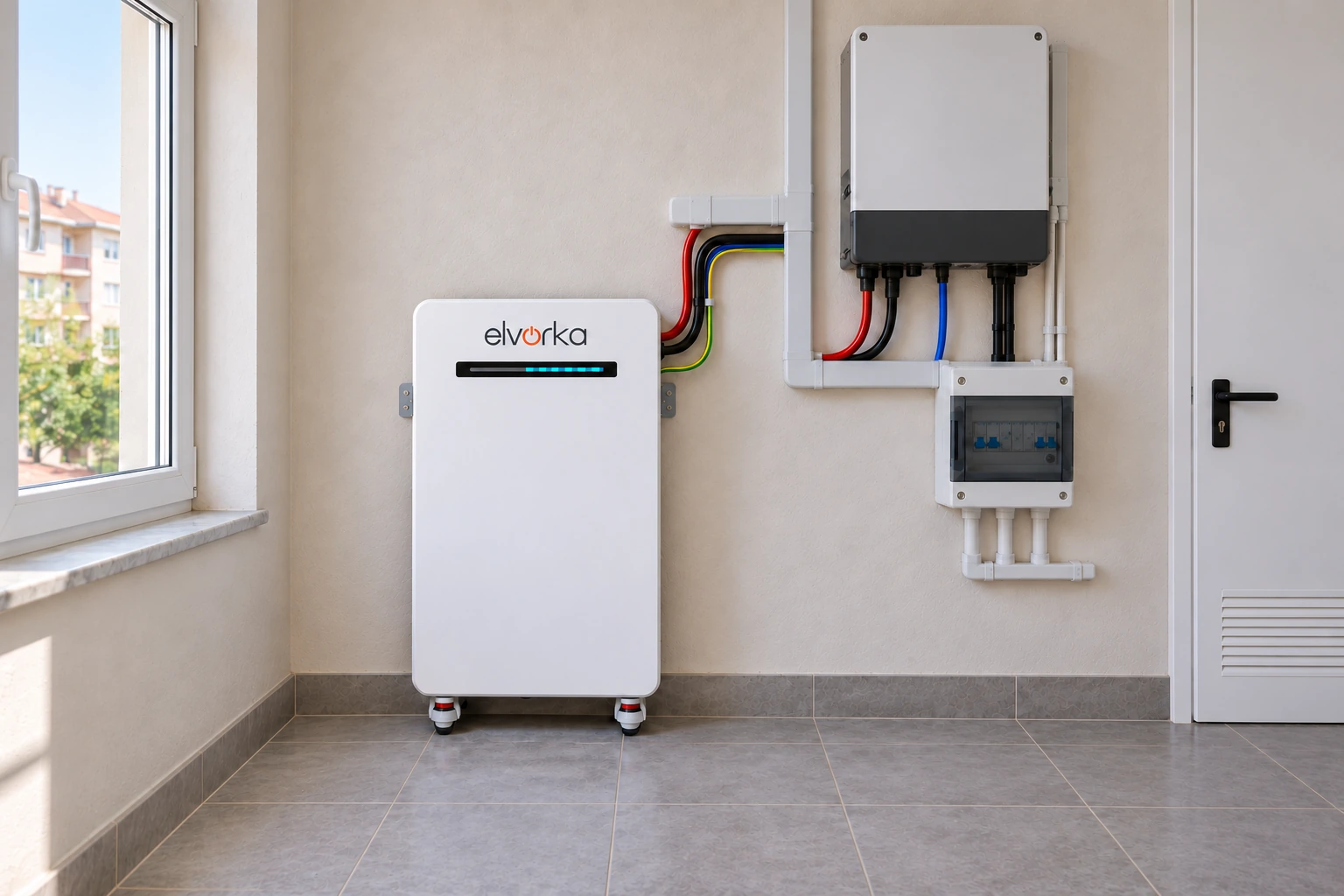
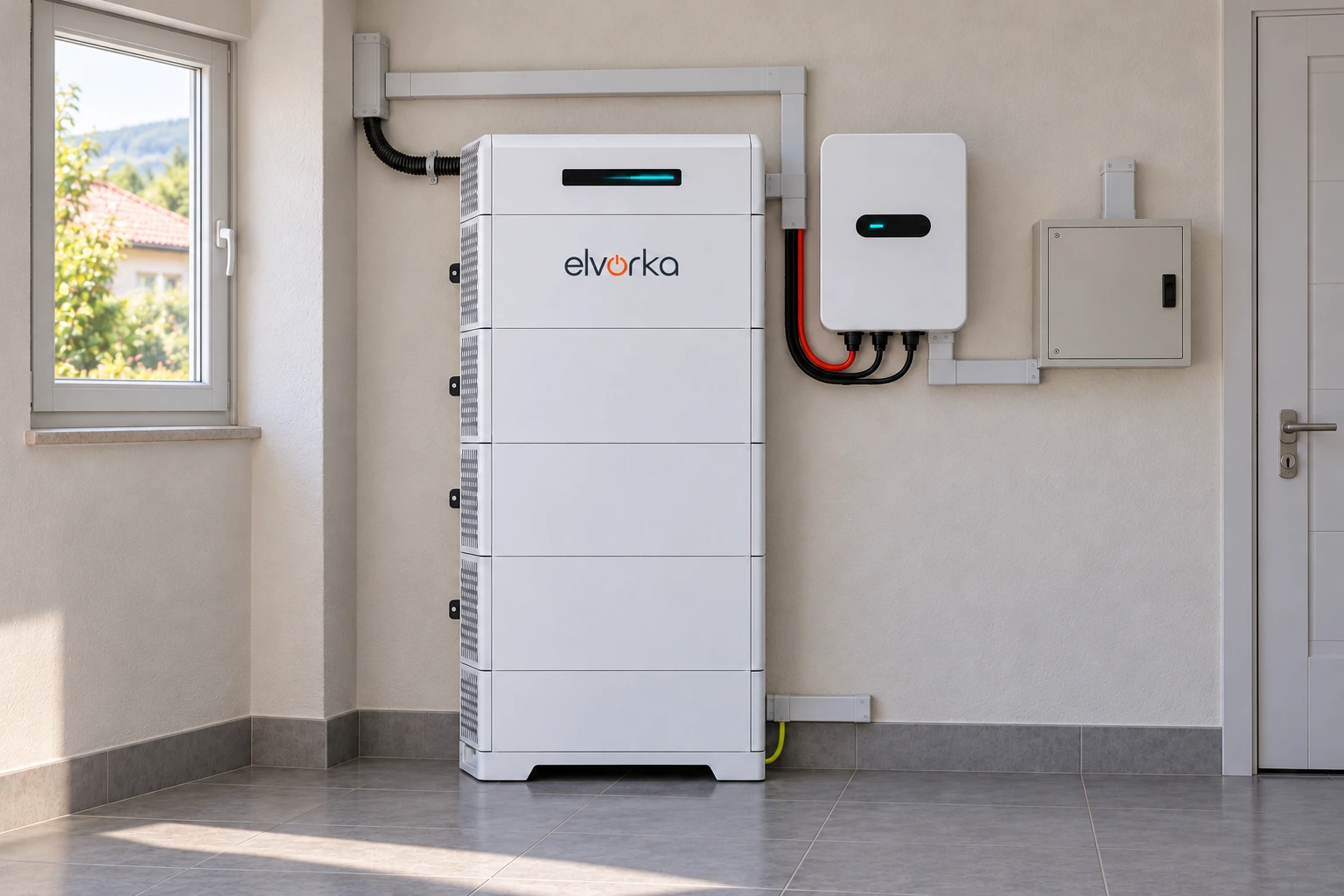
A dry utility room, a seasonally hot garage and a coastal service area place different demands on equipment. Assess conditions where the battery will stand, including the coldest and hottest periods. The following local profiles help frame the questions; they do not certify a particular installation.
MGM distinguishes coastal, Mediterranean, Marmara, Black Sea and continental conditions. The relevant value for a battery is the actual temperature and exposure in its equipment area, not one temperature assigned to all Türkiye.
Plan for coastal summers, damp rooms and inland winters.
Mediterranean / Aegean home · summer heat
Coastal conditions differ from the continental interior. Check whether the proposed room collects afternoon or roof heat.
An EU all-in-one has an IP21 housing and needs cooling and service space. Its listed charge range of 0 to 55 °C does not establish full-power operation at the top limit. For HP Ultra, confirm the selected configuration's temperature limits separately.
Questions for your installer
- What is the hottest observed temperature at the unit?
- Does the room stay enclosed during summer?
- What output derating and ventilation requirements apply to the exact model?
Marmara / Black Sea home · moisture checks
MGM identifies these as distinct climate types. Check local rain exposure and indoor damp instead of assuming an enclosure rating solves the whole site.
TR Pro and HP Ultra list IP66, while EU lists IP21 and other families have IP20 or optional IP54. These are not evidence of flood, condensation or salt-spray suitability. Select a protected equipment space and confirm the model's site requirements.
Questions for your installer
- Can rain, damp or condensation reach the equipment?
- Is coastal salt-air exposure relevant to the location?
- Are service connections protected and the equipment area kept clear?
Interior or eastern location · cold-season charging
MGM describes more continental conditions inland. An unheated room or garage needs a local temperature check even when the occupied home is warm.
TR Pro lists charge 0 to 55 °C and discharge −20 to 60 °C; the lower discharge figure is not a charging permission. Optional self-heating must be confirmed for the selected model. TA6000's general operating field does not independently establish its battery charging boundary.
Questions for your installer
- Can charging occur when the battery is below 0 °C?
- Which confirmed heating and low-temperature charge protections are provided?
- Can the installation use a dry temperature-controlled equipment room?
Planning notes
- EU and TA6000 are integrated battery-plus-inverter systems. TR, HP and TB are battery-only families requiring a compatible external inverter.
- Choose the actual temperature and enclosure configuration. Optional self-heating is not a claim that every family charges below 0 °C.
- Match DC voltage, currents, protocol and the required AC/phase configuration before choosing capacity. More kWh does not automatically increase AC output.
Keep charging and discharging limits separate
The TR Pro literature lists charging at 0–55 °C and discharging at −20–60 °C. The colder discharge boundary is not permission to charge below zero. Self-heating is optional and must be confirmed for the exact configuration. HP Ultra temperature limits require configuration confirmation; do not transfer another family's limits to it.
Read the views, then request the exact manual
The technical library retains the original product views and numbered interface labels. A visible connector is not enough to infer a pinout, polarity or power rating. Confirm the selected model's wiring diagram, protection, cable requirements, clearances, torque values and communication settings from its installation documentation. The scene illustrations are visual references, not wiring instructions.
Record the proposed room, expected temperatures, moisture exposure and maintenance access. For an integrated system, confirm the required AC configuration. For a battery-only system, include the existing inverter model and DC voltage range in the brief.
Questions for your installer
Can a battery in a coastal home be placed outside?
Confirm rain, humidity, salt-air exposure and the exact model's installation instructions. IP66 is not a flood or salt-spray guarantee; the reviewed literature does not establish these additional conditions.
Will the example load include my air conditioner or electric heater?
No. These high-demand appliances need their own running and starting-power assessment, along with battery DC capability and inverter AC/backup capability. Use their actual data rather than adding them to a small essentials estimate.
Which details help you select a battery for my existing inverter?
Provide the brand, model, DC battery-voltage range, supported CAN/RS485 protocol, firmware and charge/discharge limits, plus the required circuits and backup duration. Nominal voltage alone is insufficient.